Showing posts with label Devil's Advocate. Show all posts

Saturday, 7 September 2013

Devil's Advocate: Steampunk


Next week is the biggest Steampunk convention in Europe, if not the world (despite what Guiness think): Asylum in Lincoln, UK.  Half of the city is taken over by men in top hats, women in corsets, and gadgets galore.  As the 'normals' are allowed to use the city as well, this inevitably leads to one question that everyone is guaranteed to be asked at least once- 'What exactly is Steampunk?'

Currently there is no truly accepted definition.  The most commonly accepted answer is 'Victorian Sci-Fi', though some disagree with that, thinking sci-fi doesn't necessarily have to be involved which leads to the argument of whether you're just a Victorian re-enactor.  Even taking sci-fi into account people argue over the rules- is it a simple alternate-history in which steam became the major power source instead of electricity, or is it following the rules of definitive Steampunk fiction like War of the Worlds in which we could logically assume we reverse engineered rayguns from aliens, or is it a world in which magic has been discovered in place of electricity leading to all sorts of aether devices... the list goes on.  And that's just the core principles of the genre, I haven't even touched on what could be the definitive piece of Steampunk music...

One of the problems with defining the genre, is the name- specifically the 'punk' part.  To most people's minds this conjures images of violent men with mohawks causing mayhem in the name of anarchy; something that couldn't be further from the Steampunk image.  The original explanation doesn't help matters much either- the name was coined by author K. W. Jeter who used it as a temporary term, a variation on Cyberpunk, which makes people think that Steampunk is a sub-genre of a sub-genre of goth.  Because of these, some people in their explanations of the genre say 'ignore the punk part', which does nothing but confuse.  Instead I propose this explanation:  The point of 'Punk' is to defy society's expectations; in the 70s people were expected to be smart, polite, generally nice people, and so Punks were instead rude, disrespectful, and anarchic.  Nowadays, with the rise of chavs, society expects us to be rude, disrespectful, and anarchic so instead we're smart, polite, and generally nice people.

Now for the 'Devil's Advocate' part of this blog... Here are some controversial topics, and reasons why I think they should at least be considered.  Please note, as with all my Devils Advocate blogs, I do not necessarily believe in the arguments I'm presenting- I just want people to be a little more open-minded to controversial topics.

Steampunk Music.
The music currently consists of Industrial, Darkwave, Folk Rock, Punk, Prog Rock, Goth, Hip-Hop and much much more, with very little connecting them.  As such, there is no defining sound for Steampunk.  This has led to countless arguments over whether Steampunk music should be classified by the lyrical content- i.e airships- or by the sound, using more Victorian sounding instruments like the violin or harpsichord.  Why not have both?  I see Steampunk as alternate-reality, and for the world to feel real then it would have just as many genres of music as it does now.  This is the defining feature of Steampunk- its diversity.

Ray Guns.
As far as I know, no-one believes Steampunk MUST involve rayguns, but there is a substantial part of the community that believes there is no place for them.  Their point is that we don't have rayguns now, so why would they exist in Steampunk?  It's a fair point, as raygun technology seems a distant dream even now, over 100 years on from the point where the Steampunk universe diverged from our own.  The simplest explanation comes from taking War of the Worlds as literal, as the author Robert Rankin does- the Martians invaded, they were defeated, we could reverse-engineer their technology.  An alternate explanation is that we simply don't know what advancements could have been made without electricity- all of our inventions are from an entirely electronic point of view, but if we were forced to look at options involving steam (or aether) then we could have completely different inventions, amongst which may lie rayguns.

Anachronistic Materials.
Creativity is a big part of Steampunk, and central to crafting is the debate on which materials to use.  Some want to restrict themselves by using only materials Victorians had access to- starting from scratch and requiring a greater investment of time and effort- whereas others use modern items and give them a slight mod and paint job.  Neither of these ways is the 'right' way- the modern view is correct in that 'Steampunk doesn't equal Victorian', therefore make use of what you've got; but equally the old-fashioned view is correct in that 'I put in all this time and effort to get something that looks perfect, and you're getting praise for simply painting something'.  Unfortunately this is true in every crafting circle- often the shorter job will be more popular than the longer one that required more effort, but the trade-off is that the one that started from scratch will be regarded as better quality, and people will appreciate the amount of effort that's gone into it.  The problem is that the longer job doesn't appreciate the fact the shorter one still required effort, and the shorter one doesn't understand why the longer would want to restrict themselves.  Again, the majority of people will value both methods, but these are the central points to the most vocal arguments.

Taxidermy.
Animal rights is a tricky subject.  The only universal agreement is that endangered animals should not be killed for any reason.  It is widely accepted that animals should not be killed specifically for fashion.  A lot of people will say any form of taxidermy is supporting the murder of animals in some way- often there's no guarantee you're buying from someone who's obeying the relevant laws.  Some believe animals shouldn't be killed even if they're pests.  The problem is that Victorians loved taxidermy, and many Steampunks appreciate the use of taxidermy as well.  This is an argument that can't be won- it doesn't matter if you assure people that the animals you have were killed as pests, humanely, or that they're vintage and the hunter is long-dead as well, some people just won't accept it.  It's entirely up to you what you do, but please be careful with who you're buying from- there are a lot of illegitimate sellers that will say they followed anti-pest laws but are still ultimately making a profit.
(Please note that my hat at Asylum will be decorated with bits of bird.  I am confident that the seller was following appropriate laws, and the birds used were killed as pests.)

'Steampunkers'
...Sorry, I've got no defense for the use of this term.  If you use it and have any respect for the English language, then stop it- you don't call chavs 'chavers' or goths 'gothers'.


If you're a Steampunk, then I hope to see you next week at Asylum!  If you're not, then I hope you've got some understanding of the culture, and although it sounds like constant arguing then don't be put off- this is mostly confined to internet forums, and in person you will see that we're all splendid people!

Friday, 23 August 2013

Devil's Advocate: Batman


The internet is once again abuzz with a controversial casting decision:  Ben Affleck will be the next Batman, making his début in the next Superman film.  The majority of responses have been 'Noooooo!' or 'I must be dreaming!  This can't be happening!', but is all this just an overreaction?  After all, this isn't the first time Batman has had controversial casting decisions, and in some cases the actors have pulled off performances that many consider couldn't have been done better by anyone else.  So let's have a brief retrospective of other casting controversies in the Batman series (only going by the films).

"Warner Bros. received thousands of letters of complaint by fans commenting that he was the wrong choice to portray Batman, given his prior work in comedies and the fact that he lacked the suave, handsome features and tall, muscular physicality often attributed to the character in the comic books."  This is not a future biography of Affleck, but it is in fact a quote from Wikipedia regarding Michael Keaton- the man who reignited the public's interest in Batman after the campy Adam West series of the 60s.  Keaton's portrayal received wide-spread praise, and Batman would become one of the highest grossing movies of 1989.  Also of note from this Batman reboot is Jack Nicholson as the Joker- a multiple Oscar-winner, his portrayal of the chaotic evil Joker is considered one of the best performances of his career.

Val Kilmer was the next Batman, and he seemed like he could portray the role better than Keaton due to his more muscular figure.  And sure enough he was a good Batman, able to keep up with all the fight scenes etc- but his Bruce Wayne performance was lacklustre, and so he received mixed reviews.  Proof, therefore, that perhaps Bruce Wayne is more important than Batman?  After all, most of Batman's screen time can be filled by a stunt double, especially with digital enhancement.

Next came Batman and Robin, featuring George Clooney as Batman- this may have been a controversial choice, but his performance is vastly overshadowed by the poor writing and direction of the film, and the performances of his co-stars.  Of course this was the film so bad that it killed the franchise for almost 10 years.

Then came Batman Begins, with Christian Bale- perfectly suited for the role, the only criticism people tend to have of him is his at-times ridiculous gravelly voice.  There was little controversy about his casting, but then came The Dark Knight, featuring the character that inspired me to be 'Devil's Advocate' for Ben Affleck:

Heath Ledger as the Joker.  This was the biggest controversial casting decision that I can remember from any movie, let alone Batman.  Ledger had previously been known for playing handsome leading men- specifically a gay cowboy- and now they wanted him to be a psychopathic villain in clown makeup, that had to top Jack Nicholson's performance.  And it worked better than anyone would have believed.  Sure, there's a lot of cynics that say he was only good because of some sense of guilt over him dying, but it's indisputable that he did a solid performance and showed he could pull off a role that no-one would expect from him.

This is where Ben Affleck comes in.  Affleck is known for being an actor that stars in films that receive bad reviews, yet inexplicably do well in the box office (shades of Val Kilmer?).  He is known for playing... well, himself.  He has said himself that people don't see him as a fictional character- they only see him as Ben Affleck, and being Batman may be a way to overcome that (reminiscent of Heath Ledger?  Before the Joker, Ledger was always instantly recognisable as 'that guy').  He also doesn't have the muscles to be Batman, but then the story is that Batman's coming out of retirement so he's bound to be a bit out of shape (and again, where were Michael Keaton's muscles?).

Ultimately, I think Affleck could portray an excellent Bruce Wayne- so long as people try and see him as the character and not the actor.  In my mind, the man is always more important than the suit as that's where the character is developed (and from a technical view, you can always hire a stunt man).

That being said- this film is guaranteed to have high box office ratings due to the subject, so does he need to redeem himself?  Why not stay typecast as the man who stars in inexplicably successful bad movies?  Then when this movie kills the franchise for another ten years, Affleck could work on becoming the next George Clooney...

Friday, 28 June 2013

Devil's Advocate: Video Games

With all the talk going round at the moment about the XBox One and the various 'blunders' it's made, I thought I would attempt to find some method in the madness.  After all, Microsoft, Sony and Nintendo wouldn't be some of the most valuable companies in the world if they didn't have any business sense.

Before I start, I would like to make it clear that I don't necessarily believe any of the points raised below are 'right'- I'm just trying to see the logic behind them.

'Always Online' DRM
The facts: Several games require the device they are being played on to be constantly connected to the internet, otherwise the game is unplayable.  This is usually as anti-piracy measure (as they can check whether you have a legit copy of the game or not if you're connected to their server), but is increasingly being used to boost performance due to cloud computing.
The problem: Although the state of things is rapidly improving, there is still a huge issue with connectivity.  Rural areas are sometimes barely better than dial-up, and for some gamers the internet isn't an option (especially relevant to those in armed forces).  This wouldn't be much of an issue, were it not for the fact that even single player games now require internet connections.  Then comes the issue of if the servers are hacked, meaning even those with good connections can't play...
The company's opinion: Microsoft is the biggest disaster here, as a representative stated that dropping connectivity isn't an issue at all in the modern world, and if you have a problem with it you can just keep playing your XBox 360 and probably couldn't afford a new console anyway.  The more tactile approach would have been to explain that Microsoft has plans to utilise cloud computing to boost the performance of their already-impressive console, and therefore their online policy would be a necessary evil.  Besides that, their online policy didn't require always-online, instead connecting just once every 24 hours- a much more reasonable requirement that was sadly overlooked.
The result: No company has successfully demonstrated the pro's to an online connection for a single player
Yeah, that blunder.
game.  Sim City came close, but due to the huge blunder that was their launch it has dropped off the radar.  Regarding Microsoft, they have u-turned on their policy, again without stating the benefits of cloud computing, instead merely saying the decision to be online or not is down to the consumer.  The message this sends is that Microsoft are untrustworthy, and think their customers know more than they do- not an effective way to run a business.

Pre-owned Games
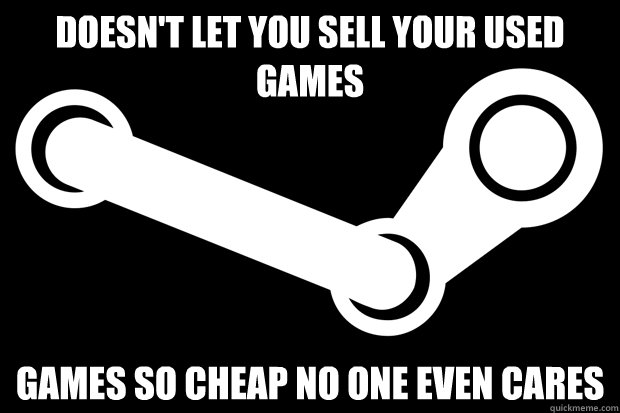
The facts: Pre-owned games are a huge part of the gaming industry, and many consider them to be a thorn in the publisher's side.  After all, any re-sales are money that isn't going to the publisher.  As such we have platforms such as Steam and companies such as Microsoft that want to prohibit pre-owned games as much as possible.
The problem: This generally makes gaming a very expensive hobby.  A big factor for people buying games is the knowledge that they could get some money back on their purchase in the future.  Aside from that, it feels like a violation of consumer rights as technically you no longer 'own' your games, merely the license to play them.
The company's opinion: There is a perfect comparison to be made here: Steam vs XBox.  Both prohibit the resale of games, but have had very different consumer responses.  Microsoft made a big deal out of it at their presentation, saying it gives more money back to the developer, and stated how it makes sense from a business point of view- leading the consumer to believe they're not cared for, it just proves Microsoft are money-grabbing again.  Steam kept the lack of resales quiet- it wasn't something that needed to be said.  Because they are entirely digital, to the consumer it feels different- it doesn't feel like they're owning an actual product because there's no disc to 'own', and they're ok with that.  On top of that, due to the lack of a physical medium and the various costs associated with manufacture (creating the discs, the labor associated with this, the logistic costs, etc), Steam can afford to charge significantly less whilst still giving proceeds directly to publishers.
The result: Steam is loved by the majority of consumers for being an incredibly cheap platform, whereas XBox is hated due to it grabbing as much money as possible without caring for the consumer.  This resulted in yet another u-turn from Microsoft, and now they're saying you are able to resell any XBox One games- however the consumer remembers how far Microsoft tried to push it and are wondering what they're going to do next.  This wound will take a long time to heal.
Extra analysis:  Pre-owned games are, arguably, a good thing for the industry.  Looking purely at the numbers, it is true that no profit goes to the publisher, which is a bad thing. However, consider this scenario: Someone wants to buy Pokemon X, but thinks it's a bit expensive so they decide to sell their GBA games, as they're now obsolete- they're not being produced, but are still playable.  They get £25, meaning they're now effectively only spending £10 on Pokemon X, yet the publisher still gets the full £35.
They don't get the money from the resale, but they don't make the games any more so there was no way they would get money from it anyway.  Assuming each of those GBA games was sold to a different person, that is now 5 people who thought they would try this 'pokemon' that everyone keeps going on about, and £5 for a game is quite reasonable.  3 of the buyers decide they loved the game and want more, so immediately buy Pokemon X or Y (the publisher has now made a total of £140, which wouldn't have been possible without pre-owned sales).  The 2 that didn't like the game also resell for £5 each, getting their money back to spend on a new game- the 2 people that bought from them love the games and also buy Pokemon X or Y.  Now the publisher has made £210 all from pre-owned sales, not including future games they release that now have 5 new customers.
I'm looking forward to these in case you couldn't tell.
Therefore my solution to the pre-owned problem? For entirely digital games such as on Steam, it costs nothing to keep the games available therefore the publisher gets money from every sale.  For entirely physical games, such as the majority of console games, the customers gained from reselling obsolete games (arguably) balances the resales of current games.  For games that are a mixture of the two, such as those proposed for XBox One, it is easy to put a restriction on reselling until the game becomes obsolete getting the best of both worlds.  Consumers wouldn't be happy, but they wouldn't be angry as they are when you take away their rights altogether.

Kinect is always watching
The facts: The XBox One has a built in camera/microphone that cannot be disabled without turning the power off.  The reason for it staying on is so it can switch the console on by the user saying 'turn on'.  It is also predicted to be used for the purposes of advertising.
The problem: The fear that the device is spying on you, the government is watching everything you do and attempting to control you.  We're entering an Orwellian dystopia.
The company's opinion: Silence.  So far no real rebuttal has been made to criticisms, presumably because Microsoft doesn't think they need to give an answer as all consumers are insane conspiracy theorists.  The official statement for their reasons for implementing the Kinect in the first place are so they can provide a tailor-made experience and improve ease of use.
The result:  Consumers are slowly rationalising this, but is that a good thing?  It is true that no-one's interested in what you're doing in your front room whilst playing video games, but the real issue comes from the advertising side of things.  One scenario I read recently was regarding 'tv achievements'- a new form of advertising to make your tv watching experience more interactive.  The example given was that of being given an achievement if you could demonstrate to your Kinect that you had bought a certain brand of crisps by displaying them to the camera, and this achievement would contribute to your gamerscore.  This terrifies me more than just the government listening for the word 'assassin' to come up in conversation (a somewhat amusing thought when you consider one of the flagship games for XBox is Assassins Creed).  But then I've probably just been watching too much Black Mirror and Wall-E...

This article has been primarily about Microsoft, but that doesn't mean Sony and Nintendo are free from criticism.  At least Microsoft have shown attempts to be innovative, they just lack the people skills to demonstrate these features as good things.  Compare to:
Sony.  Primary marketing strategy consists of saying 'we're not doing the things Microsoft are doing'.  As such the PS4 currently looks like a PS3 with slightly improved graphics, and going by their past record it is probable Sony will wait to see what's successful on other consoles before implementing new features on their own.
Nintendo.  Primary marketing strategy consists of not being involved in console wars, letting Sony and Microsoft battle it out.  All they need to do is remind people that they have the rights to Mario and Zelda.  A huge disappointment considering the potential of their tablet controller for the Wii U.

I am now painfully aware of the length of this post so shall leave it here for now, though I am sure I shall have more to say during the next fiasco...